Getting vaccines from a factory to a village is a logistical nightmare, often far more complex than the science of creating them in the first place. While the World Health Organization (WHO) leads the charge for equitable access, the physical journey is blocked by real-world problems. We’re talking about getting doses to their destination on time, keeping them from spoiling along the way, and working around shoddy infrastructure. So how are global health teams actually supposed to solve these deep operational headaches?
Key Takeaways
- Cold chain failures are a huge problem, wasting roughly 20% of vaccines in developing countries and proving why solid temperature monitoring is non-negotiable.
- Getting vaccines that “last mile” to rural or conflict-torn areas requires creative thinking, like using drones or networks of community health workers, which can slash delivery times by up to 40% in some areas.
- When you connect everyone in the supply chain, from the manufacturer to the local clinic, with a shared data platform, you can improve inventory accuracy by 30% and have fewer stockouts.
- Money is a huge barrier. Low-income countries get just 15% of global vaccine R&D funding, which cripples their ability to build their own reliable supply chains.
- Building local manufacturing and fill-and-finish plants can shave months off procurement lead times and make countries less dependent on international shipping.
The Cold Chain Conundrum: Maintaining Vaccine Efficacy
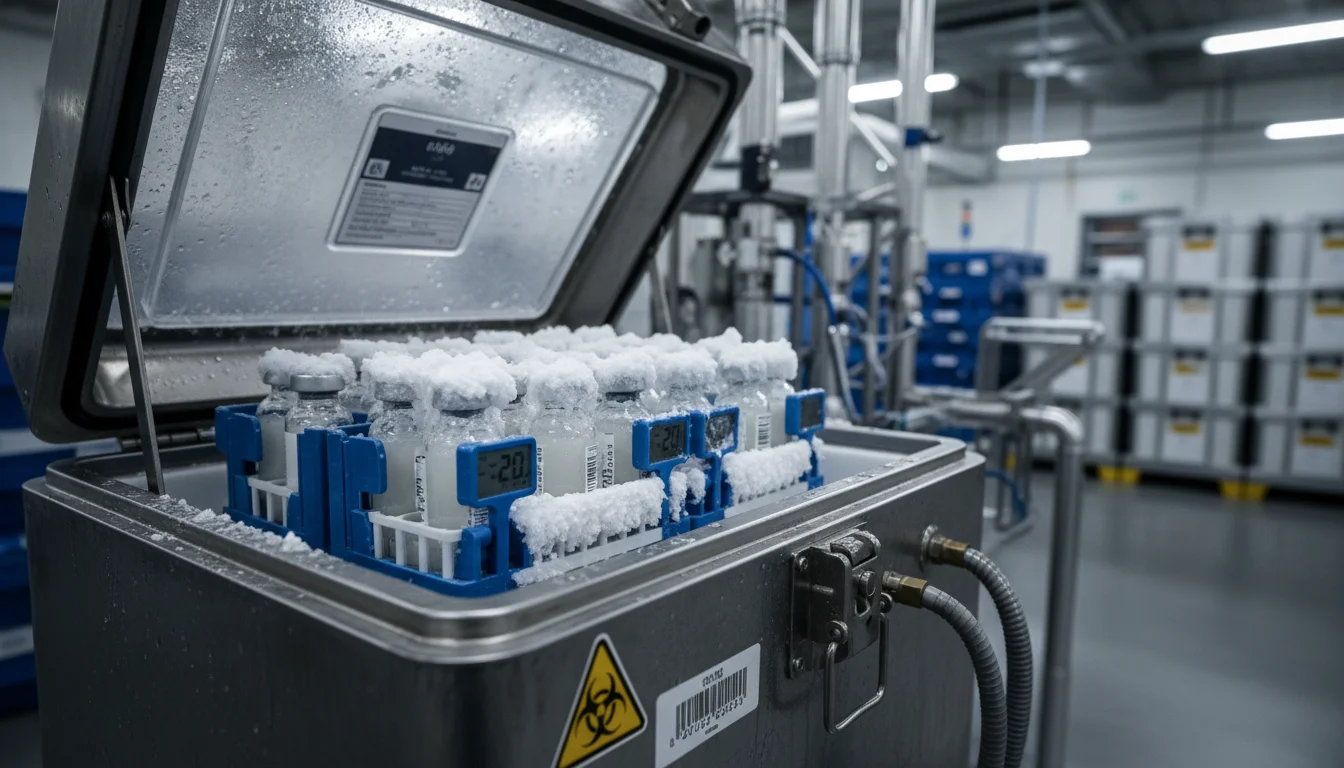
Vaccines are incredibly delicate biologicals. Most have to stay between 2 and 8 degrees Celsius from the factory all the way to a person’s arm. This entire refrigerated journey is called the cold chain, and it’s the single biggest logistical problem we face. One power outage, one broken fridge, or one person handling it wrong can destroy a whole shipment, which means wasted money and, worse, a public health failure.
The scale is huge. In 2024, UNICEF procured almost 1.5 billion vaccine doses for global programs, and every single one needs to be kept cold. In places with bad electricity grids, like you find across sub-Saharan Africa and Southeast Asia, this is a constant battle. Solar-powered refrigerators aren’t just a neat idea anymore. They’re critical infrastructure. But they’re not everywhere they need to be. A 2025 assessment by Gavi, the Vaccine Alliance, showed that only about 65% of health facilities in low-income countries actually have reliable cold chain equipment that’s up to spec. That’s a massive gap.
It’s more than just the fridges, too. You have to think about the insulated transport boxes, the little devices that track temperature, and most importantly, the people who know how to handle the vaccines properly. Think about a box of measles vaccines getting bounced around on a truck for days to reach a district hospital. If there’s no temperature logger inside or nobody trained to read it, you have no idea if those vaccines are still good. The whole thing has to be a complete system of training, constant monitoring, and knowing what to do the second a temperature alarm goes off. Yes, building a solid cold chain costs a lot of money, but it’s nothing compared to the cost of letting it fail, both in lives and in dollars.
Working through the Last Mile: Reaching Remote Populations
Getting a shipment of vaccines through customs and into a country’s capital city is one thing. The real challenge starts after that: getting them out to the most remote and vulnerable people. This “last mile” delivery is almost always the most difficult and expensive part of the whole journey, involving everything from dense jungles and mountains to islands, often on roads that barely exist, especially during rainy season.
Take a place like the Democratic Republic of Congo. Delivering vaccines to a village that’s only reachable by riverboat and then a long walk can take days, with someone carefully managing temperature the whole time. You often have community health workers (CHWs) literally carrying vaccine coolers on bikes, motorcycles, or on their backs to get to these communities. It’s incredible work, but it’s slow and one small delay can ruin everything. That’s why the World Health Organization (WHO) in its 2025 Global Vaccine Action Plan review stressed that we can’t just rely on heroic human effort forever. We need solutions that are more sustainable and can be scaled up.
Drones have been a big help in some places. In Rwanda and Ghana, for example, projects have shown that drones can zip medical supplies over impassable roads to clinics in a matter of hours. Zipline has been doing this in rural Rwanda since 2016, delivering blood and vaccines and cutting delivery times dramatically. But let’s be realistic. These programs are expensive to set up, need special regulations, and you have to have skilled people to run them. Plus, a drone can only carry so much for so long (what are you going to do, send a thousand of them?), which is a real problem when you’re trying to run a massive vaccination campaign.
Funding, Infrastructure, and Human Resources: Systemic Barriers
So much of this boils down to three things: money, infrastructure, and people. A proper vaccine supply chain costs a fortune to build and run. You need the cold chain equipment, the trucks, the warehouses, and the software to track it all. Most low-income countries just don’t have the domestic budget for this stuff, so they end up depending on international donors and aid.
The difference in infrastructure is just night and day. Wealthy countries have great road networks, power that stays on, and modern hospitals. In many developing countries, you’re dealing with crumbling roads, power cuts, and a severe shortage of trained healthcare professionals. This gap makes every single step of vaccine distribution harder. A 2025 report by the World Bank highlighted that bad infrastructure alone can drive up the cost of delivering vaccines by 10% to 15% in certain regions.
And then you need the people. A vaccine rollout is only as good as its workforce. You need logisticians who can manage the chaos, pharmacists who know the storage rules inside and out, and healthcare workers who can actually give the shots. The real challenge is finding, training, and paying these people enough to keep them, especially out in rural areas. Without good people, the best plans and fanciest equipment just fall apart. I’ve seen firsthand how a single, sharp district health officer can completely change the game for their area because they know the people and can spot problems before they happen. That kind of local expertise is everything, but it’s not always valued.
Data Integration and Supply Chain Visibility: The Digital Imperative
At this point, trying to run a vaccine program without good data and digital tools is just setting yourself up for failure. The old paper-based ledger systems are a mess, they’re full of mistakes, slow things down, and give you zero real-time information about what you actually have in stock. This isn’t a small problem. It’s how you end up with one clinic completely out of vaccines while a warehouse a few hundred kilometers away has doses that are about to expire. It’s a terrible and completely avoidable waste.
When you put in a proper digital platform that can track a vaccine from the factory floor to a clinic, you completely change how you manage the supply chain. Suddenly you have real-time data on your inventory, any temperature problems, where your shipments are, and how fast vaccines are being used. Some pilots are even testing blockchain to create a totally transparent record of a vaccine’s journey. This isn’t just theory. The Global Fund to Fight AIDS, Tuberculosis and Malaria has been a proponent of digital health solutions, and its 2025 impact report noted that countries adopting integrated logistics management information systems (LMIS) experienced a 25% reduction in stockouts for essential medicines. That same logic applies directly to vaccines.
Of course, just buying the software doesn’t solve the problem. A lot of countries don’t have the basic digital infrastructure, like reliable internet or even enough computers. Then you have to spend a ton of money and time training healthcare workers to actually use the new systems. And anytime you’re dealing with health data, you have to be obsessive about privacy and security. Getting past these roadblocks means governments, tech companies, and international groups have to work together to build up local capacity and make sure everyone can get access to these powerful tools. This is about creating a whole digital environment where data can move securely to inform decisions at every single level.
The fact that a vaccine can go from a lab to someone’s arm is a huge achievement, but the journey also shines a harsh light on the inequalities that still exist. Fixing the logistics of vaccine rollouts will take continuous investment and a real commitment to building stronger healthcare systems across the board. If we get serious about solid cold chains, creative last-mile delivery, better infrastructure, and smart digital tracking, we have a real shot at getting these vaccines to every person who needs them.
What is the primary challenge in vaccine logistics?
Maintaining the cold chain, keeping vaccines at a precise temperature range (typically 2 to 8 degrees Celsius) from the factory to the patient, is the biggest challenge. If the chain breaks at any point, the vaccines can become ineffective.
How do organizations overcome last-mile delivery issues in remote areas?
They use whatever works. This includes networks of community health workers, specialized vehicles like motorcycles, drone technology, and even people carrying vaccine coolers on foot or by bicycle to reach communities cut off by poor infrastructure.
What role does data play in modern vaccine distribution?
Data from digital platforms and inventory systems gives you a real-time view of vaccine stock levels, temperature readings, and shipment locations. This visibility is key to preventing stockouts in some clinics while other doses go to waste.
Why are human resources critical for successful vaccine rollouts?
You need a skilled workforce of logisticians, pharmacists, and healthcare workers to manage the complex supply chain, handle the vaccines correctly, administer them safely, and build trust within communities to drive up vaccination rates. Without them, the system fails.
What are some long-term solutions for strengthening global vaccine logistics?
Long-term fixes include investing in resilient national healthcare infrastructure, building local manufacturing and fill-finish capabilities to reduce dependencies, setting up sustainable funding mechanisms, and promoting international partnerships for sharing technology and knowledge.



