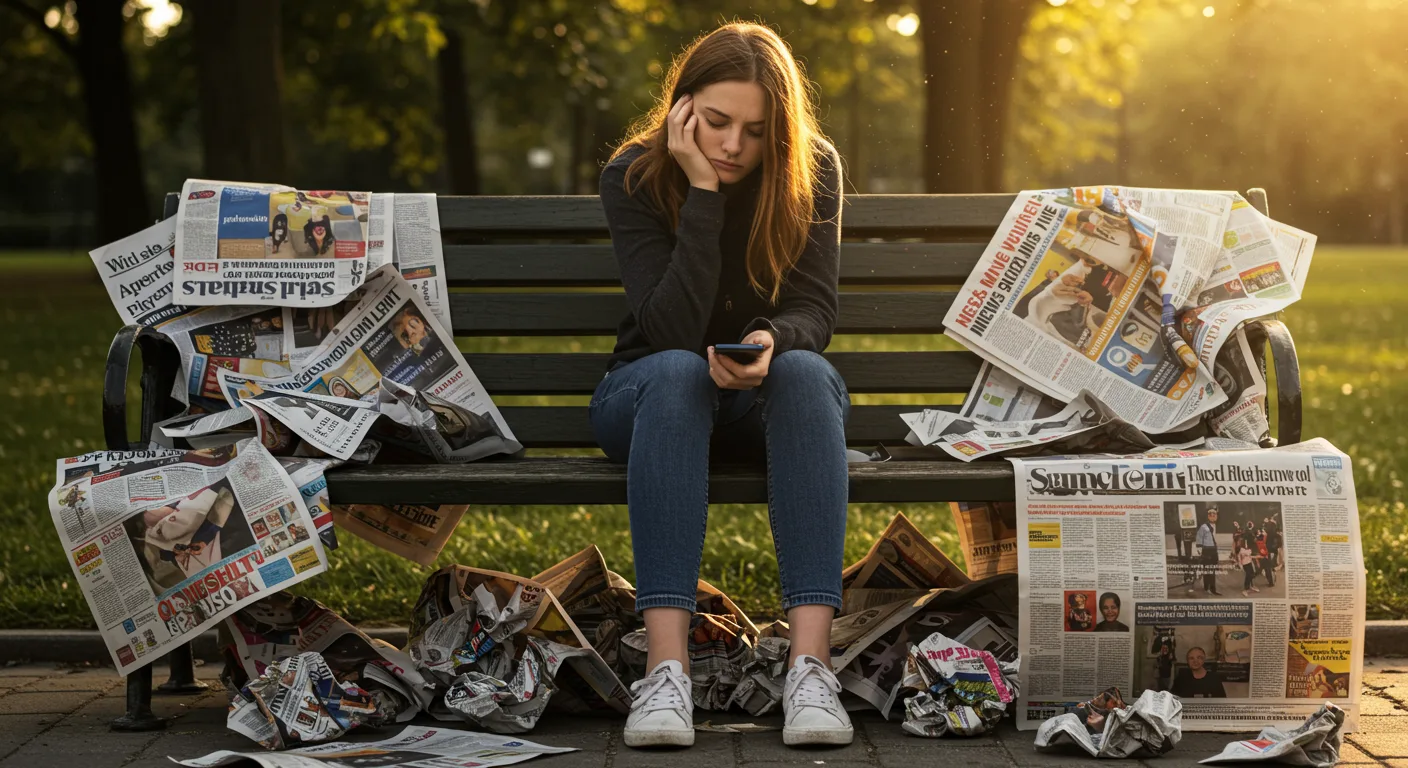
Staying informed about updated world news is more critical than ever, but the sheer volume of information can lead to errors in understanding and dissemination. Are we truly more informed, or just more overwhelmed by a constant stream of potentially flawed narratives?
Key Takeaways
- Verify sources by checking multiple reputable news outlets and fact-checking websites like PolitiFact before sharing any information.
- Be wary of emotionally charged headlines and content, as these are often designed to bypass critical thinking and spread misinformation.
- Understand the difference between news reporting, opinion pieces, and analysis to avoid misinterpreting the intended message.
- Consider the source’s potential biases and affiliations to assess the credibility of the information presented.
ANALYSIS: The Echo Chamber Effect and Confirmation Bias
One of the most pervasive problems in consuming news today is the “echo chamber” effect. Social media algorithms, designed to maximize engagement, often feed us content that confirms our pre-existing beliefs. This creates a dangerous feedback loop. We see the same opinions repeated, reinforcing our views and making us less receptive to alternative perspectives. I had a client last year who was absolutely convinced of a particular conspiracy theory surrounding the 2024 elections, and it was nearly impossible to have a rational conversation with him because his entire social media feed validated that viewpoint.
Confirmation bias further exacerbates this issue. People tend to seek out information that confirms their existing beliefs and dismiss information that contradicts them. This is a natural human tendency, but it can be particularly harmful when it comes to understanding complex global events. For example, someone who already distrusts international organizations might be more likely to share a story critical of the United Nations without verifying its accuracy. According to a 2025 report by the Pew Research Center Pew Research Center, individuals who primarily get their news from social media are significantly more likely to believe false or misleading information.
To combat these effects, actively seek out diverse sources of information. Read news from outlets with different political perspectives. Engage in respectful dialogue with people who hold different views. Challenge your own assumptions and be willing to change your mind when presented with compelling evidence. It isn’t always comfortable, but it’s necessary.
ANALYSIS: The Dangers of Sensationalism and Clickbait
In the competitive world of online news, sensationalism and clickbait have become rampant. Many news outlets prioritize attracting eyeballs over providing accurate and nuanced reporting. This often leads to exaggerated headlines, emotionally charged language, and the omission of crucial context. A headline like “World on the Brink of Nuclear War!” might generate clicks, but it also instills unnecessary fear and distorts the reality of the situation.
Sensationalism can also lead to the misrepresentation of facts. A minor skirmish might be portrayed as a major conflict, or a scientific study might be misinterpreted to support a particular agenda. The pressure to be first with a story can also lead to errors in reporting. Outlets might rush to publish information before it has been properly verified, resulting in retractions and corrections later on. A Reuters Reuters analysis found that retractions in online news have increased by over 300% in the past decade, largely due to the speed and pressure of the digital news cycle.
Be wary of headlines that seem designed to provoke an emotional response. Look for news sources that prioritize accuracy and objectivity over sensationalism. Read beyond the headlines and delve into the details of the story. Consider the source’s reputation and track record for accuracy. Remember, if a headline seems too outrageous to be true, it probably is.
ANALYSIS: The Erosion of Trust in Mainstream Media
Public trust in mainstream media has been declining for years. This decline is driven by a number of factors, including perceived bias, accusations of “fake news,” and the rise of alternative news sources. While some criticisms of mainstream media are valid, the erosion of trust has created a vacuum that is often filled by misinformation and conspiracy theories. This is a dangerous trend, as it makes it more difficult for people to distinguish between credible and unreliable sources of information.
One of the key drivers of this distrust is the perception that mainstream media outlets are beholden to certain political or corporate interests. Critics argue that these interests can influence the way news is reported, leading to bias and the suppression of certain stories. There’s also the issue of media consolidation. A small number of corporations now control a large percentage of the news media landscape, raising concerns about the diversity of perspectives and the potential for censorship.
To address this issue, news organizations need to be more transparent about their ownership, funding, and editorial policies. They also need to be more accountable for their mistakes and more responsive to public concerns. At the same time, consumers need to be more critical and discerning in their consumption of news. Don’t blindly trust any single source of information. Instead, seek out multiple perspectives and do your own research. The Associated Press Associated Press is generally considered a non-partisan source and can be a good starting point.
ANALYSIS: The Weaponization of Disinformation and Propaganda
Disinformation and propaganda have always been tools of war and political manipulation, but the internet has made it easier than ever to spread false or misleading information on a global scale. Foreign governments, political groups, and individuals can use social media, fake news websites, and other online platforms to influence public opinion, sow discord, and undermine democratic institutions. We ran into this exact issue at my previous firm when we were hired to debunk a series of fabricated stories targeting a local political candidate in the lead-up to the mayoral election. It was a coordinated effort, and it was incredibly difficult to combat.
One of the most concerning trends is the use of “deepfakes” – AI-generated videos that can make it appear as if someone is saying or doing something they never actually did. These deepfakes can be incredibly convincing, and they have the potential to cause serious damage to individuals and institutions. Another tactic is the creation of fake social media accounts that are used to spread disinformation and amplify certain messages. These accounts can be very difficult to detect, and they can have a significant impact on public opinion.
To combat the weaponization of disinformation, social media companies need to do a better job of identifying and removing fake accounts and false information. Governments need to invest in media literacy education to help people develop the skills they need to distinguish between credible and unreliable sources of information. Individuals need to be more skeptical of the information they encounter online and be willing to fact-check claims before sharing them. The BBC BBC offers excellent resources on media literacy and fact-checking.
ANALYSIS: The Impact on Geopolitical Stability
The spread of misinformation and the erosion of trust in news have serious implications for geopolitical stability. False or misleading information can inflame tensions between countries, incite violence, and undermine international cooperation. When people are unable to agree on basic facts, it becomes much more difficult to address shared challenges like climate change, pandemics, and economic inequality. A report by the Council on Foreign Relations Council on Foreign Relations warned that the proliferation of disinformation poses a significant threat to global security.
For example, false claims about election fraud can undermine faith in democratic processes and lead to political instability. Disinformation campaigns targeting specific ethnic or religious groups can incite hatred and violence. The spread of conspiracy theories can erode trust in public health institutions and hinder efforts to combat pandemics. The consequences of these trends are far-reaching and potentially catastrophic.
To mitigate these risks, it is essential to strengthen international cooperation on combating disinformation. Governments, social media companies, and civil society organizations need to work together to develop effective strategies for identifying, countering, and mitigating the spread of false information. It is also crucial to promote media literacy education and support independent journalism. The future of geopolitical stability depends on our ability to navigate the complex information landscape and distinguish between truth and falsehood.
In conclusion, staying informed in 2026 requires active and critical engagement. Don’t just passively consume updated world news; question it, verify it, and seek out diverse perspectives. The responsibility for discerning truth from falsehood rests with each of us.
How can I tell if a news source is biased?
Look for consistent patterns in the way the source reports on certain issues or political figures. Check the source’s ownership and funding to see if there are any potential conflicts of interest. Read articles from multiple sources to get a balanced perspective.
What are some reliable fact-checking websites?
PolitiFact is a good resource for fact-checking political claims. Snopes is a good resource for debunking rumors and urban legends. FactCheck.org is another reputable fact-checking website.
How can I avoid falling for misinformation on social media?
Be skeptical of headlines and stories that seem too good or too outrageous to be true. Check the source of the information and see if it is a reputable news outlet. Look for evidence that supports the claims being made. Be wary of emotionally charged language and images.
What is media literacy and why is it important?
Media literacy is the ability to access, analyze, evaluate, and create media in a variety of forms. It is important because it helps people develop the critical thinking skills they need to navigate the complex information landscape and distinguish between credible and unreliable sources of information.
What can I do to support independent journalism?
Subscribe to independent news outlets. Donate to non-profit journalism organizations. Share and promote independent journalism on social media. Support policies that protect the freedom of the press.














