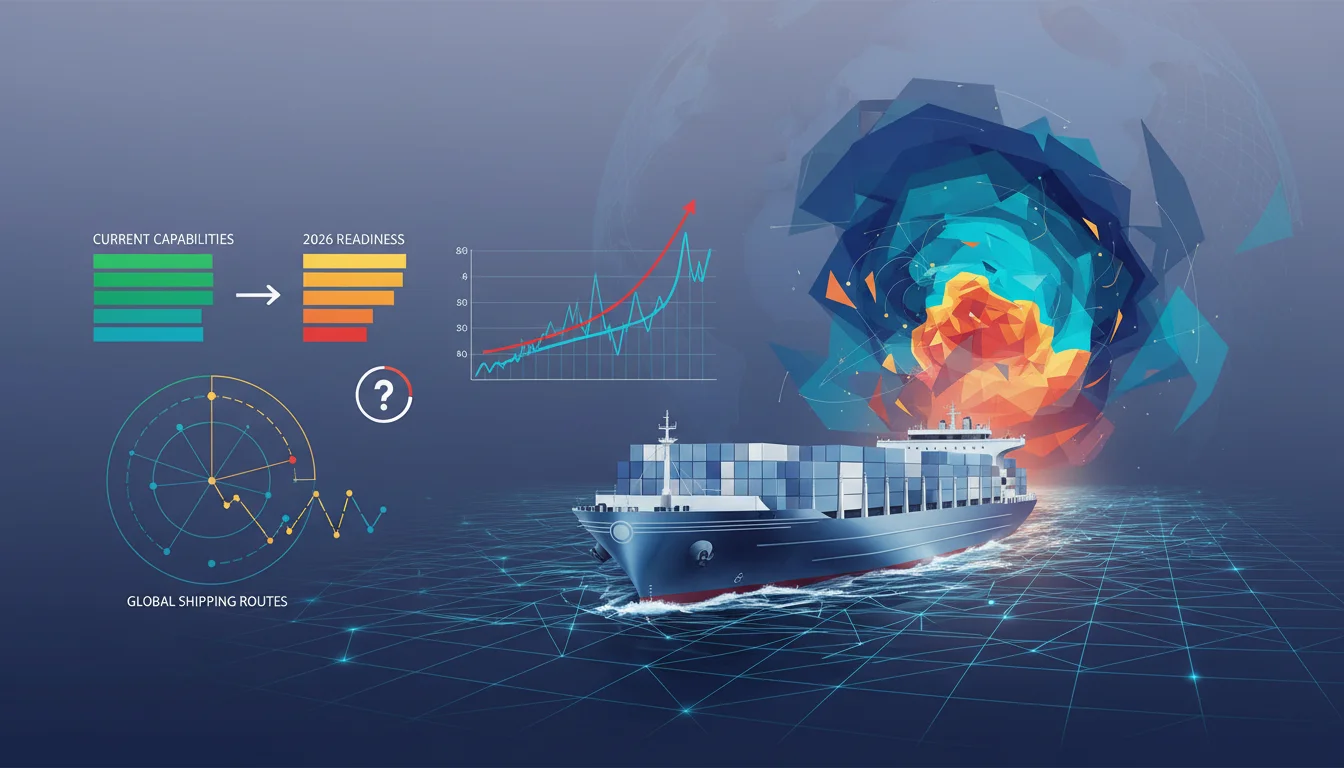
With 2026 on the horizon, the global shipping industry is staring down another potentially volatile typhoon season. Weather patterns are getting more intense, and that means we need a much more proactive and smart approach to maritime weather forecasting and how we run our ships. The question is, are the disaster plans we have now really enough to protect supply chains and, more importantly, human lives?
Key Takeaways
- By Q2 2026, shipping companies have to get real-time satellite data and AI-driven predictive analytics baked into their operational planning to actually improve route optimization.
- Before the typhoon season officially kicks off in June 2026, all vessel operators need to have their crews fully trained on new, advanced emergency protocols for severe weather.
- Port authorities in the hot zones, especially across Southeast Asia and the Western Pacific, must have their updated storm surge and cargo security procedures finalized and tested by April 2026.
- The International Maritime Organization (IMO) is set to release new guidelines on vessel structural checks for extreme weather in early 2026. Following them won’t be optional.
The Shifting Climate of Maritime Operations
The past decade has shown a clear, measurable spike in the frequency and intensity of extreme weather, a trend that’s hitting global shipping right where it hurts. A 2025 report from the World Meteorological Organization (WMO) (WMO State of the Global Climate 2024) points out that tropical cyclones are showing more rapid intensification, which makes them a nightmare to predict in the short-term. This “rapid intensification” (RI) means a storm can blow up from a tropical storm to a major typhoon in less than 24 hours, giving ships almost no time to find a safe route or port. This isn’t some academic theory. It’s a practical problem that directly increases the risk of losing cargo, damaging vessels, and putting seafarers in grave danger.
For ship operators, the margin for error has practically disappeared. We’re seeing more and more cases where traditional weather routing software, which is often based on older models, just can’t keep up with these sudden changes. The industry has to get past relying on historical averages and start using predictive analytics that can handle these dynamic, fast-moving situations. You have to understand that a storm track isn’t a solid line on a chart, it’s a cone of probability that can widen or shift dramatically with just a few hours’ notice.
Technological Frontiers in Weather Forecasting
Good disaster preparedness is built on good forecasting. For 2026, the maritime industry is finally starting to adopt more advanced tech that promises better accuracy. We’re getting more frequent, higher-resolution data on atmospheric conditions, sea surface temps, and wind shear from satellite systems like NOAA’s Joint Polar Satellite System (JPSS) (NOAA JPSS). All that data gets fed into complex numerical weather prediction (NWP) models that are now getting a boost from artificial intelligence and machine learning.
These AI models can spot subtle patterns in massive amounts of data that a human forecaster might just miss which helps make better calls on a typhoon’s intensity and track. Some of the leading maritime analytics platforms are now pulling in real-time data from thousands of onboard sensors across the world’s fleets, creating a live, self-correcting weather map. This gives us hyper-localized forecasts that can guide decisions for a single ship, instead of just issuing a broad warning for a whole region. The objective is to understand a typhoon’s potential impact on specific vessel types, their cargo stability, and transit times. That kind of detail is a huge step forward for managing risk.
But the tech isn’t being adopted evenly. Smaller shipping companies often can’t afford these expensive solutions, which creates a disparity in preparedness across the fleet. This is a major weak spot. One poorly managed ship getting caught in a typhoon can set off a chain reaction of delays, salvage jobs, and insurance claims that screws up the entire supply chain. It really shows we need broader industry standards and maybe even some way to help smaller players get access to this tech.
Operational Resilience: Rerouting and Port Management
Effective maritime weather preparedness takes more than just good forecasting. It requires solid operational protocols. When a typhoon warning is issued, the decisions made about rerouting, port entry, and cargo handling are everything. By 2026, a lot of the major ports in typhoon hotspots, like the Port of Hong Kong (Hong Kong Marine Department), have spent big on better storm surge barriers and automated mooring systems. These investments are paying off. A ship stuck at sea because it can’t safely berth or depart racks up huge demurrage fees and can throw schedules into chaos for weeks.
Rerouting is getting smarter, too. Instead of just drawing a big circle around a storm, modern systems can calculate the most fuel-efficient and safest alternate routes by factoring in real-time sea states, vessel speed, and even predicted wave heights along the new course. This is about minimizing a vessel’s exposure to dangerous sea conditions and high winds that can still cause major damage hundreds of miles from the storm’s center. We’re moving from just reacting and avoiding storms to proactively planning optimized routes around them.
On top of that, port authorities are finally working more closely with shipping lines. We’re seeing pre-emptive port closures, coordinated ship departures, and cleaner communication channels become standard procedure. For example, the Philippine Ports Authority (PPA) (Philippine Ports Authority) now uses a graded alert system that triggers specific actions, from just being on high alert to a complete shutdown of all port activity. This kind of structured plan helps avoid the last-minute panic and makes sure ships get clear instructions and support when a storm is bearing down.
Crew Training and Safety Protocols
All the technology in the world is useless without a well-trained crew. The human element is still the most important part of disaster preparedness. In 2026, the focus is on realistic, scenario-based training that gets seafarers ready for the insane conditions they could face. This means drills for heavy weather navigation, emergency steering, damage control, and even the mental side of being isolated and tossed around for days. Crews need hands-on experience, even if it’s in a simulator, to build the muscle memory to react correctly under intense pressure. Just reading a manual isn’t going to cut it.
A lot of shipping companies are now making crews take annual refresher courses that are built on lessons learned from recent incidents. For instance, after a few close calls in the Western Pacific during the 2024 season, one of the big European container lines rewrote its heavy weather protocol with specific new instructions for securing deck cargo against extreme rolling and pitching motions (a detail that’s often missed in standard training). This kind of constant improvement, based on what actually happens out there, is incredibly valuable. There’s also a bigger focus on managing fatigue, because an exhausted crew is far more likely to make a mistake when a critical decision has to be made in a storm.
And it’s not just about the crew on the ship. Shore-side support teams are just as important. These are the people responsible for tracking vessels, feeding them weather updates, and coordinating with search and rescue if the worst happens. Solid communication protocols, with redundant satellite systems, are absolutely non-negotiable. The old saying “prepare for the worst, hope for the best” is especially true for maritime safety when typhoons are spinning up.
Insurance, Regulations, and Future Outlook
The financial hit from not being ready for a typhoon can be massive. Insurance premiums for ships running in high-risk zones keep going up, which reflects how often insurers are paying out claims for weather damage and lost cargo. The insurers are now demanding stricter compliance with safety standards and will often cut premiums for companies that can prove they’re using advanced weather routing and have their crews fully trained. That financial pressure is a powerful motivator for change in this business.
Regulatory bodies like the International Maritime Organization (IMO) (International Maritime Organization) are also constantly reviewing the rules. While you rarely see a brand new regulation specifically for typhoon preparedness, there’s a big push to get companies to actually follow the rules we already have. Inside the IMO’s Maritime Safety Committee, there are ongoing talks in 2026 about potential changes to the International Convention for the Safety of Life at Sea to more directly address these rapidly intensifying storms. That could mean new requirements for stronger hulls on new ships or mandatory advanced weather radar on all vessels over a certain size. The industry needs to get ahead of these changes and start adapting now, not wait for them to become law.
Looking ahead, integrating autonomous systems and remote monitoring could make things even safer and more efficient during extreme weather. Can you imagine drones that can inspect a ship’s hull for damage in rough seas, or AI systems that automatically adjust the vessel’s trim and ballast to reduce stress from severe pitching and rolling? This tech is still new for wide use in the maritime world, but it’s the next frontier for building shipping operations that are truly resilient against the forces of nature.
For the 2026 typhoon season, vigilance is just the start. The global shipping industry has to invest in better forecasting technology, keep refining its operational plans, and make sure crew training is a top priority to protect lives and keep global supply chains from breaking.
What are the primary challenges for global shipping during typhoon season in 2026?
Operators are dealing with more frequent and intense typhoons, especially storms that strengthen too quickly to predict easily, a phenomenon called “rapid intensification.” This puts crews, ships, and cargo at much higher risk. Gaps in technology adoption and relying on outdated forecast models also make things harder.
How are AI and machine learning improving typhoon forecasting for maritime operations?
AI and machine learning systems analyze huge amounts of data from satellites and ship sensors to find weather patterns that humans would miss. This results in more accurate predictions of a storm’s track and intensity, allowing for vessel-specific forecasts that help with route planning and operational choices.
What measures are ports taking to enhance preparedness for severe weather?
Ports are investing in physical upgrades like better storm surge barriers and automated mooring. They’re also improving their processes, creating better communication plans with shipping lines and using graded weather alerts to coordinate pre-emptive closures and vessel departures to avoid last-minute problems.
What kind of training is essential for ship crews regarding typhoon preparedness?
The most important training involves realistic, hands-on drills for things like heavy weather navigation, using emergency steering, damage control, and properly securing deck cargo. It’s also critical that these courses are updated with lessons learned from recent incidents and include a focus on managing crew fatigue during a crisis.
How do insurance companies influence maritime weather preparedness?
Insurers have a big impact by adjusting premiums based on a company’s risk management. They give better rates to operators who use advanced weather routing systems, have thorough crew training programs, and can prove they stick to high safety standards. This creates a strong financial reason to invest in being prepared.



