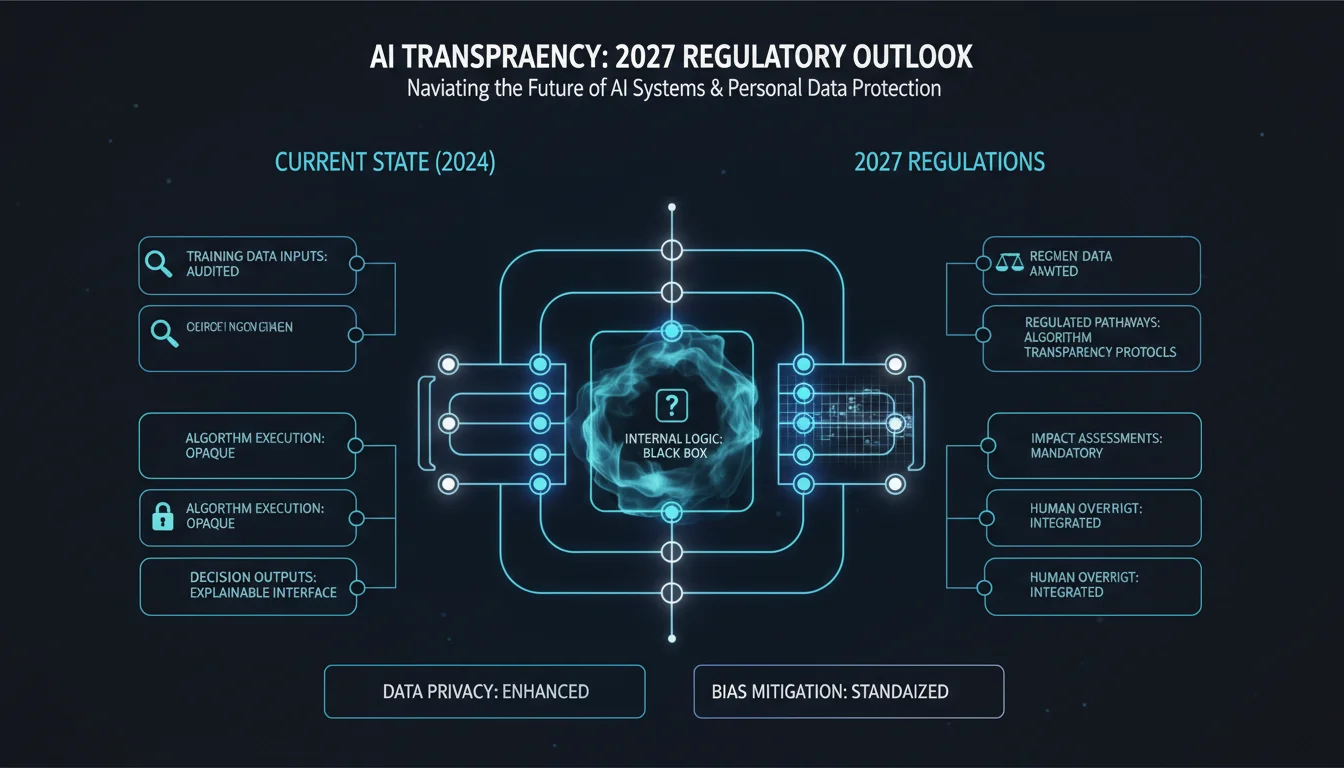
Opinion: The age of black box algorithms running our lives is ending. We’re finally starting to demand answers. These systems, which control everything from your credit score to what you see on social media, have way too much power and almost zero public oversight. The worldwide push for algorithmic transparency isn’t some technicality for nerds. It’s a complete rethinking of what’s fair and who’s accountable now that AI is everywhere. The choice we have to make is stark: either we demand total transparency or we accept a future where hidden biases in digital systems are free to run wild and destroy public trust.
Key Takeaways
- Look for major governments like the EU and US to pass laws by 2027 that force companies to disclose how their high-risk AI systems work.
- You should start looking for companies, especially in banking and hiring, that can give you a straight answer about how their algorithms make decisions.
- Any business that gets out ahead of this by building transparency into their systems now will earn customer trust and leave their competitors behind.
- Lawmakers need to stop talking in vague principles and write specific, enforceable rules that demand AI systems that can be audited and that produce explanations a normal person can understand.
The Imperative for Explainable AI and Public Trust
The idea that algorithms are just too complicated for anyone but a few engineers to understand is a convenient and dangerous myth, usually pushed by the people who benefit from keeping them secret. We’re not demanding companies post their secret sauce online, which is the straw man argument they always use. We just want a clear explanation for how these systems make decisions that affect real people. Think about it. A loan gets denied. You never get a callback for a job. Your news feed slowly walls you into an echo chamber. These things have serious consequences, and without transparency, you have no way to fight back or even figure out what happened.
The European Union’s Artificial Intelligence Act, which should be fully in place by 2027, is a good start. It sorts AI systems by how much damage they can do and slaps heavy transparency rules and mandatory human oversight on anything “high-risk”, think systems used for policing, hiring, or running power grids. A Reuters analysis pointed out that companies with high-risk AI in the EU will have to pass conformity checks and guarantee a human is in the loop which is already setting a new global standard. This isn’t just happening in Europe. In the US, the whole conversation around an AI Bill of Rights, even if it’s not law yet, shows the same thinking is taking hold. The National Institute of Standards and Technology (NIST) has also published its AI Risk Management Framework, which puts explainability and interpretability right at the center of building responsible AI.
I’ve seen it myself, clients trying to appeal a decision made by a machine with absolutely no clue how the machine was thinking. It’s a dead end. For there to be any real accountability, we need to know the main reasons an AI came to its conclusion. This is why explainable AI (XAI) has become a practical necessity. XAI’s goal is to make these models understandable, giving us a peek into their logic. If we don’t get this right, people will just stop trusting these systems, and the public backlash will bring progress to a halt.
Working through the Regulatory Patchwork: A Global Challenge
Right now, the global rulebook for AI transparency is a mess. The EU is writing strict laws, but other countries are trying a softer approach with voluntary guidelines, hoping the market will just sort itself out. That’s a huge risk. A hands-off approach just creates a fragmented mess where companies can shuffle their most opaque operations to whatever country has the weakest rules.
The real work is getting everyone on the same page to stop a “race to the bottom” in AI ethics. A 2025 Pew Research Center report found that 68% of people globally are worried about the lack of transparency in AI used by governments and companies, so there’s clearly public pressure to get this sorted out. Some people claim that tough regulations will kill innovation, but I think the opposite is true. Clear rules give innovators a stable playing field where they know what’s expected of them, creating a market where building ethical AI makes you more competitive. The argument that transparency gets in the way of progress usually comes from companies that just want to build things fast and worry about the consequences later, which is a terrible long-term strategy that poisons the well for everyone.
Look at the financial industry, where algorithmic trading and credit scoring have been around for years. The secretiveness of those systems has always raised questions about fairness. Now regulators are finally cracking down. The Consumer Financial Protection Bureau (CFPB) in the US, for example, is taking a much harder look at algorithmic bias in lending, which sends a clear message to banks that they need to be ready to explain their models. This is about keeping the market fair and making sure people don’t lose faith in the system.
Consumer Rights and the Power of Informed Choice
When you boil it down, this whole debate is about basic consumer rights. People have a right to know the ingredients in their food, and they have a right to understand how an algorithm is making a major decision about their life. This includes the right to get an explanation, the right to appeal an automated decision, and the right to opt out where it’s possible. These ideas are simply extensions of existing consumer protection laws for the digital world.
The current lack of transparency just leaves people helpless. How can you fight back when you’re sure an algorithm made a mistake? People are being denied insurance or screened out of job applications every single day by automated systems with no explanation given. These aren’t just thought experiments. It’s happening now. People also need a better grasp of how AI works to fight for their rights, which is why AI literacy is so important. Groups that can demystify this stuff for regular people have a huge role to play.
Some people will tell you that consumers don’t care about the technical details, which is just condescending. Maybe they don’t need a deep dive into machine learning, but they absolutely care about being treated fairly. They care when their mortgage is rejected for no reason. Any company that steps up and offers clear, simple explanations for how its AI works, maybe with a simple dashboard or a plain-English summary, is going to earn a ton of trust and customer loyalty. This is a competitive opportunity. Being transparent will make a business stand out and show that it cares about its customers. It’s simple: people do business with companies they trust, and in this day and age, trust requires transparency.
This isn’t a passing fad. The demand for algorithmic transparency is a permanent shift toward a digital world that’s more accountable to the people who live in it. Regulators, companies, and all of us have to work together to set clear rules and build a culture of explainability. We’re past the point of just watching this unfold. It’s time to actively build transparent AI that actually works for people.
What does “algorithmic transparency” actually mean?
It means giving people a straight, understandable answer about how an AI system reached its decision. It doesn’t mean publishing proprietary code. It’s about explaining what data was used, which factors were most important for the outcome (like a loan denial), and what the known biases of the system are.
How are governments handling AI transparency?
They’re using a mix of new laws and regulations. The EU’s AI Act is the prime example, putting strict transparency rules on high-risk AI. Other places, like the US, are creating official guidelines like the NIST AI Risk Management Framework to push companies toward more responsible and explainable AI development.
What are the benefits of transparency for consumers?
More transparency gives consumers a fair shot. It gives them the power to challenge automated decisions they think are wrong or biased. It helps people understand how AI is being used on them, uncovers hidden biases, and builds back trust in the digital services we all use.
Will transparency rules slow down AI innovation?
Some people make that argument, but most experts I know believe clear rules actually produce better, more responsible innovation. When companies have ethical guardrails and a predictable regulatory environment, they can build things that people will actually trust and accept, which is better for long-term growth.
What’s the role for businesses in all this?
Businesses have to be on the front lines. They need to design AI that is explainable from the start, be upfront with customers about how it works, and build their own internal rules for ethical AI. The companies that do this will build more trust, protect their reputation, and in the end beat their competition.



