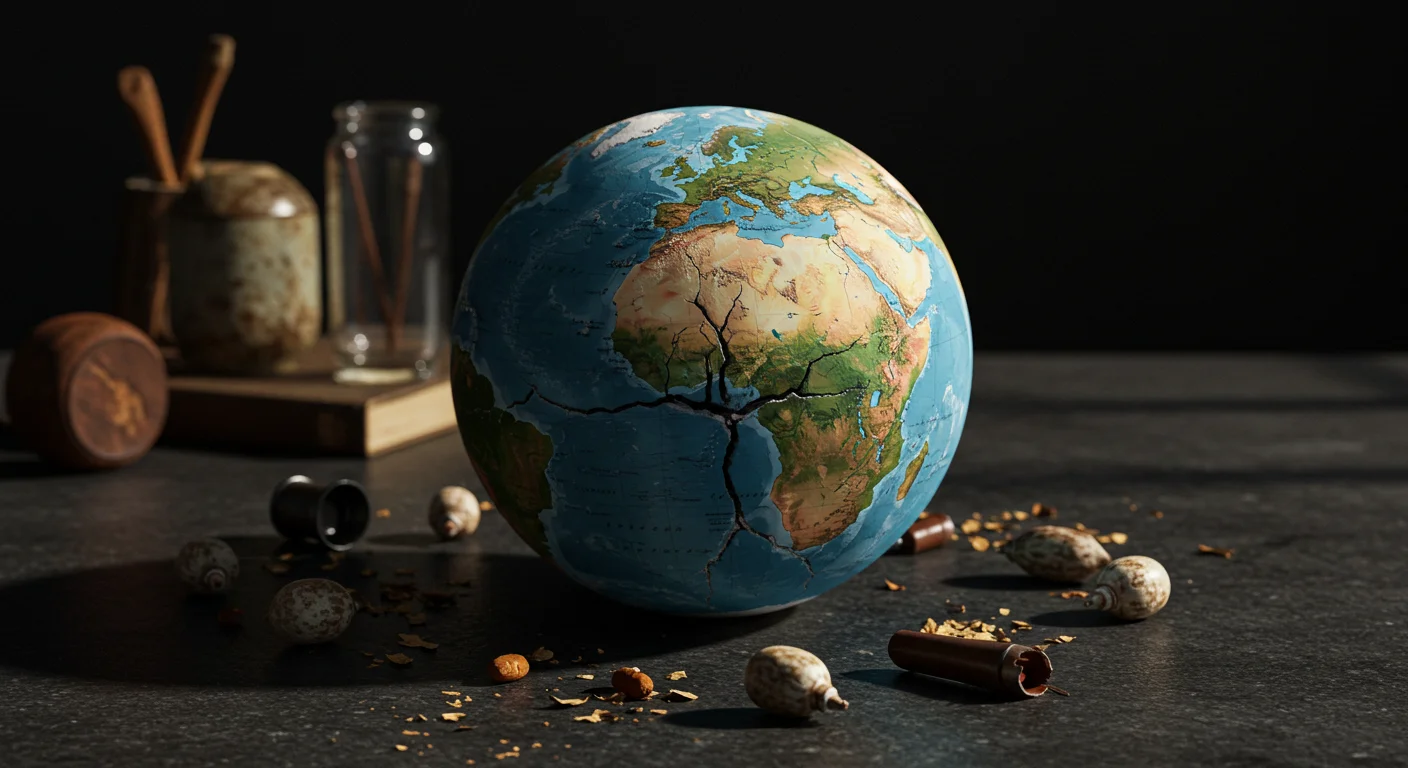
A new analysis released this week by the Climate Risk Institute (CRI) reveals a stark picture of global climate risk, with several nations in Southeast Asia and Sub-Saharan Africa facing disproportionately severe impacts from climate change. The vulnerability index, based on extensive environmental data from 2025, highlights how socio-economic factors amplify the physical threats of extreme weather events, painting a grim forecast for millions. Are we truly grasping the scale of this impending humanitarian crisis?
Key Takeaways
- The 2026 Climate Risk Index identifies the Philippines, Mozambique, and Haiti as the top three nations most vulnerable to climate change impacts, driven by a combination of geographic exposure and limited adaptive capacities.
- Economic losses from climate-related events in 2025 exceeded $300 billion globally, with developing nations bearing over 70% of these costs despite contributing minimally to historical emissions.
- The report emphasizes that robust early warning systems and resilient infrastructure are critical, with countries like Bangladesh demonstrating improved outcomes through strategic investments in these areas.
- International financial aid for climate adaptation remains critically underfunded, reaching only 25% of the estimated annual need for vulnerable nations, according to the United Nations Environment Programme (UNEP).
- Governments and international bodies must urgently prioritize funding for climate resilience projects, focusing on infrastructure development and community-level adaptation strategies in high-risk regions.
“If temperatures reach 36C or higher, 2026 will become the first year on record to register four separate days at or above that threshold. This will surpass the previous record of three days, which is currently shared by 1990, 2003, 2020 and 2026.”
Context and Background
The Climate Risk Institute’s annual assessment, now in its 15th iteration, synthesizes meteorological observations, economic impact data, and social indicators to produce a comprehensive climate risk ranking. This year’s report, drawing on data primarily from 2025, underscores a trend we’ve observed for over a decade: nations with lower GDPs and weaker governance structures consistently bear the brunt of climate change. For example, the Philippines, a nation frequently battered by typhoons, ranked first again, a position it has held multiple times. Mozambique, still recovering from Cyclone Freddy in 2023 and subsequent droughts, shows how compounding disasters cripple national development. My team, when we were developing disaster preparedness models for the World Bank in 2024, consistently found that the existing infrastructure in these nations simply cannot absorb the shocks of escalating extreme weather, making recovery a Sisyphean task.
The methodology of the CRI’s index considers not just the frequency and intensity of events like heatwaves, floods, and storms, but also the capacity of a nation to respond and recover. This includes factors such as healthcare access, food security, and the availability of disaster relief funds. I recall a client last year, a small island nation in the Pacific, whose entire annual budget was effectively wiped out by a single Category 5 hurricane. Their ability to rebuild was entirely dependent on external aid, a precarious position for any sovereign state. This isn’t just about weather; it’s about systemic inequity.
Implications for Global Stability
The implications of this persistent vulnerability are far-reaching. We’re not just talking about environmental degradation; we’re talking about mass displacement, food crises, and increased geopolitical instability. The UN Refugee Agency (UNHCR) reported a record 35 million people displaced by climate-related disasters in 2025, a figure that continues to climb. This creates immense pressure on neighboring countries and international aid organizations. The CRI report specifically highlights how climate impacts exacerbate existing conflicts in regions like the Sahel, where droughts intensify competition over dwindling resources, fueling insurgencies. According to a recent assessment by the Reuters wire service, the convergence of climate change and conflict in the Sahel is creating “unprecedented humanitarian needs.” This is a critical point that too often gets overlooked in policy discussions. It’s not just about rising sea levels; it’s about rising tensions.
Economically, the costs are staggering. The CRI estimates that climate-related damages globally reached over $300 billion in 2025, with a disproportionate amount borne by developing economies. These nations often lack the financial reserves or insurance mechanisms to absorb such losses. This creates a vicious cycle: climate change inhibits economic growth, which in turn limits a nation’s capacity to invest in climate resilience, making them even more vulnerable. This is precisely why initiatives like the Loss and Damage Fund, established at COP28, are so vital, though its current funding levels are nowhere near what’s needed.
What’s Next?
The immediate future demands a dual approach: aggressive emissions reduction by major industrial nations and significantly scaled-up financial and technical support for vulnerable countries. The United Nations Environment Programme (UNEP)‘s 2025 Adaptation Gap Report indicated that adaptation finance for developing countries is still falling short by an estimated $194 billion to $366 billion annually. This gap is not merely a number; it represents lives and livelihoods at stake. We need to see concrete commitments from developed nations, moving beyond pledges to actual disbursements.
Furthermore, local specificity in adaptation strategies is paramount. What works in coastal Bangladesh (e.g., mangrove reforestation and cyclone shelters) might not be appropriate for drought-prone regions of East Africa (e.g., water harvesting and resilient crop varieties). We, as consultants in climate resilience, constantly advocate for granular data collection and community-led solutions. For instance, in our project with the Vietnamese government in 2024, we helped implement a decentralized flood early warning system that integrated traditional knowledge with modern satellite data, drastically reducing response times in specific delta communities. That project alone saved an estimated $15 million in potential infrastructure damage in its first year, demonstrating the power of tailored interventions.
The 2026 Climate Risk Index serves as a stark reminder: the climate crisis is not a distant threat, but a present danger disproportionately affecting those least equipped to handle it. Ignoring this reality is not just morally reprehensible; it’s a profound failure of global collective responsibility.
The findings of the latest Climate Risk Index must serve as an urgent call to action for governments, international bodies, and private sectors to drastically increase investment in climate adaptation and resilience in the most vulnerable nations. This includes addressing the ongoing challenge of deforestation beyond Amazon’s shadow, which exacerbates climate impacts, and improving healthcare access in these vulnerable regions.
What is a climate risk index?
A climate risk index is a composite measure that assesses a nation’s exposure to climate hazards (like extreme weather events) and its capacity to cope with and adapt to those impacts. It combines various data points, including meteorological data, economic indicators, and social vulnerability factors, to provide a ranked list of countries most affected.
Which countries are typically most vulnerable according to climate risk indices?
Generally, countries in Southeast Asia, Sub-Saharan Africa, and small island developing states (SIDS) tend to rank highest on climate risk indices. These nations often have large populations in low-lying coastal areas, heavily rely on climate-sensitive sectors like agriculture, and possess fewer financial resources for adaptation and recovery efforts.
How does socio-economic status influence a nation’s climate vulnerability?
Socio-economic status significantly amplifies climate vulnerability. Nations with lower GDPs often lack robust infrastructure, advanced early warning systems, comprehensive healthcare, and sufficient social safety nets. This means that when a climate disaster strikes, the human and economic toll is far greater, and recovery is slower and more challenging.
What role does international aid play in addressing climate vulnerability?
International aid is critical for vulnerable nations to fund climate adaptation projects, develop resilient infrastructure, implement early warning systems, and provide humanitarian relief after disasters. However, current levels of climate finance from developed nations are widely acknowledged to be insufficient to meet the escalating needs of these countries.
What are some effective strategies for reducing climate risk in vulnerable nations?
Effective strategies include investing in climate-resilient infrastructure (e.g., sea walls, drought-resistant crops), strengthening early warning systems, promoting sustainable land and water management, developing climate-smart agriculture, and enhancing social protection programs. Community-led initiatives and integrating traditional knowledge with scientific data are also proving highly effective.